Metal components. A local shop. A practical way to get started.
ASAP Metal Components began in 2010 in the New Orleans area. Our shop is at 1201 MacArthur Avenue in Harvey, where our work brings together metal material supply and sheet-metal fabrication. We help customers think through panels, structural components, trim, accessories and custom details as parts of the same project.
We work with homeowners and contractors. Some need a specific component for a repair; others are preparing a new roof, a metal building, a fence or a custom awning. The starting point is the work itself: what are you building, what do you already know, and what still needs to be confirmed?
You do not need a polished presentation to begin. A clear photo, a dimensioned sketch or a well-marked material list is often more useful than a long description. If you have plans, bring the relevant sheets and identify the areas you want to discuss. That context helps keep a component request tied to its actual purpose.
What we bring together
From the main sheets
to the unusual bend.
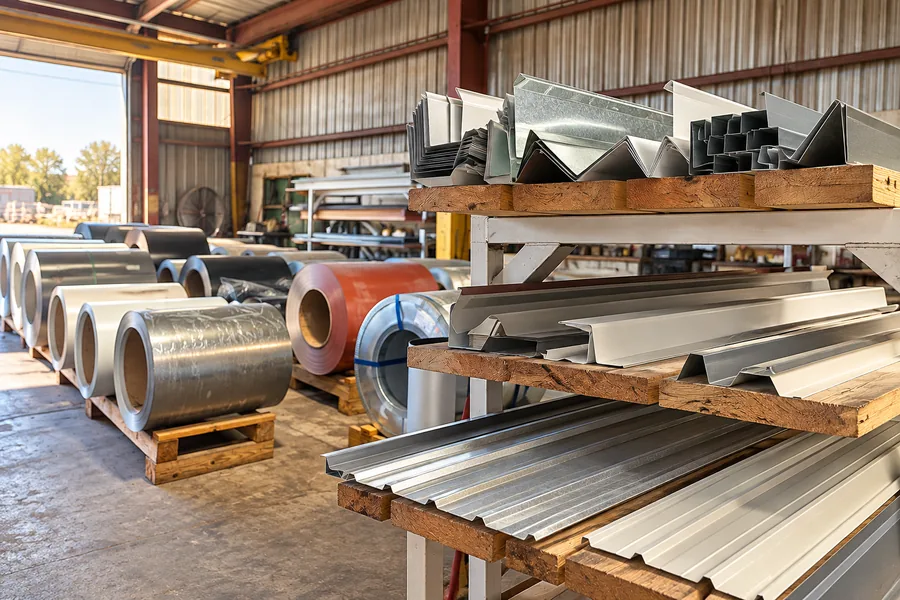
Our material offering includes roof and wall panels, structural components and the finishing parts around them. Our fabrication offering includes special trim and components, canopies, fascia systems, louvers and roof jacks. Ask about a complete metal building or mini-storage material package when that is the scope you are planning.
The existing shop information describes a hydraulic brake and in-house roll forming. For a specific part, confirm the shape, material, length and handling needs with our team. Equipment capability starts the discussion; the agreed fabrication detail defines the actual order.
How a useful material conversation works
Start with the intended use. A roof panel, wall panel, awning piece and structural component can share a finish while having very different requirements. Tell us whether this is a new installation or a match to an existing assembly, and show how the requested part connects to the surrounding work.
Next, separate identification from specification. A catalog photo can help name a part, but it cannot establish every dimension, material grade or installation detail. Where plans or manufacturer instructions control the work, keep them with the inquiry. If something is uncertain, mark it as a question rather than turning it into an assumed requirement.
Finally, make the order details readable. Put each length and quantity on its own line, mark the units and identify the finish. For custom bends, include the color side, angles and orientation. The goal is a shared understanding that can be checked before fabrication, collection or freight is arranged.
Why the small details belong in the same list
Panels draw the eye, but the edges and connections are where many of the decisions live. A roof can include eave details, ridge caps, rake trim, valleys, transitions and penetrations. A wall can involve base trim, corners, openings and junctions. Each detail needs to match the intended assembly rather than simply look similar to a picture.
The supports and accessories deserve the same attention. Purlins, girts and eave struts belong to the structural design. Fasteners, closures and sealants must be selected for the applicable materials and details. Keeping these items in the conversation early helps reveal missing information while the material request is still easy to revise.
That does not mean every customer has to perform a complete design. It means the people responsible for the design, installation and material order should be working from consistent information. We can discuss the supply and fabrication request; project-specific engineering and installation decisions need the applicable qualified people and documents.
A clearer way to compare panels and colors
Our materials page combines a visual selector with a searchable catalog. Two physical profiles are shown separately so changing a finish does not blur the difference between Standard R-Panel and Low-Profile 5-Rib. The selected name, image and material notes stay connected as you explore.
The screen is a starting point for appearance, not a physical finish sample. Light, reflection, screen calibration and weathering change how colors look. When matching an existing project, bring photos and, where practical and safe, a sample or confirmed product information. We can then discuss the appropriate finish rather than rely on a color name alone.
The catalog also gives customers a practical language for the smaller parts. You can search, open a larger image and add items to a local checklist. Those notes can help organize a call or inquiry. They are not a purchase order or a promise that an item is currently stocked.
Our Harvey address and your project location
Our physical business address is 1201 MacArthur Avenue, Harvey, Louisiana 70058. Customers planning work on the Westbank and around New Orleans can begin with a phone conversation about the materials they need. Call before a special trip for a specific part or custom order so current availability and next steps can be confirmed.
For a project elsewhere in the Gulf South, include the destination and site context in the request. Coastal exposure, access and handling needs can affect material and freight decisions. The applicable project specifications should guide those decisions; the fact that a supplier is local does not remove the need to confirm them.
Our building information includes supply within the continental United States. That wider reach is a project-specific discussion. Ask about freight, unloading and order arrangements for the exact destination rather than assume a standard delivery promise applies to every panel or component order.
What we want you to have before you commit
A useful material request should lead to an understandable scope. Review the actual product, quantities, finish, dimensions and any custom detail before confirming. Ask which accessories are included, which are separate, and what work or equipment is the responsibility of someone else.
For building packages, keep the intended use, location, openings and project-specific design requirements together. The supplied documents and agreement should make the package boundaries clear. Avoid using a general website description as a substitute for the final order information.
Specifications and warranties also need to match the actual product. A paint-system warranty is not the same as a roof-installation warranty, and a sample specification does not approve every application. Ask for the documents that apply to the materials you are ordering and retain them with your project records.
If your project changes, tell us before the earlier dimensions or quantities are treated as final. A different opening, support arrangement, profile or finish can affect several connected pieces. Keeping one current material list helps everyone see what changed.
Bring us the next question
Whether you know the exact component or need help describing the part, start with what you have. Tell us the use, show the relevant detail and identify what needs to be confirmed. We would like the opportunity to help you get the material conversation moving.
Call 504-347-2727, browse the materials and color selector, or start a material inquiry. For custom work, a dimensioned sketch is a particularly good place to begin.
Keep the paperwork as useful as the materials
Before an order is confirmed, make sure the people involved are looking at the same version of the drawing and material list. Record changes to quantities, lengths, finish and custom bends in one place. If a measurement is preliminary, keep that label visible until it has actually been checked.
Collection and freight also need planning. Long panels and custom pieces can require particular handling, support and protection. Tell us how you expect to collect or receive the material so arrangements can be discussed before the order is ready. Ask what equipment or access is needed at the receiving end.
After the material arrives, keep the product identification and applicable documents with the project. They help the installer understand the selected assembly and give you a reliable record if a later repair, extension or warranty question arises. A color name by itself rarely captures everything needed to match a part years later.